News
A manufacturer specializing in high-end bending forming equipment
(1) When bending steel pipes with a pipe bender, different templates are made using 8# iron wires according to different pipe diameters, so as to facilitate comparison and inspection during the bending process
(2) Cold bending method: Generally, when the pipe diameter is 20mm or less, a pipe bender is used by hand. The pipe bender should be selected according to the pipe diameter, and it is not allowed to use a larger one instead of a smaller one, nor vice versa. When bending the pipe, place the pipe bender over the part of the pipe that needs to be bent (i.e., the bending point), step on the pipe with your foot, and pull the handle of the pipe bender. Apply a slight amount of force to make the pipe slightly bend. Then, move the pipe bender backward point by point, repeating the previous action until the rear end of the bending part, so that the pipe gradually bends to the required bending radius and angle.
(3) When the pipe diameter is 25mm or above, a hydraulic pipe bender should be used. The mold should be selected according to the requirements of the bending radius of the wire pipe. That is, place the pipe with the drawn line into the mold of the pipe bender, align the bending point of the pipe with the starting point of the pipe bender, then tighten the clamp. When bending, stop when the bending angle is greater than the required angle by 1° to 2°. Return the pipe bender to the starting point, and use a template to measure the bending radius and angle. It should be noted that the outer diameter of the bent pipe must fit tightly with the bending mold, otherwise the pipe will exhibit a concave or dented appearance.
(4) Hot bending method: When using the hot bending method for pipes with a larger diameter, first fill the interior of the pipe with vibrated, dried sand, and securely plug both ends. After heating on a furnace or over a coke fire, place the pipe on a mold and bend it.
When heating and bending pipes using gas welding, first mark a straight line segment on the steel pipe, then mark the heating length L. Preheat the section L first, then start from the bending point, heating while bending. The bending radius should be as consistent as possible to prevent wrinkles on the surface of the bent section. Since the angle will shrink by about 2° to 3° after bending and cooling, the bending angle should be set slightly larger by 2° to 3° than the predetermined bending angle. The heating length L can be calculated using a simple formula: L = πdR/180 = 0.0175dR
In the formula: d represents the bending angle, and R represents the bending radius.
When hot-bending, it is important to control the heat. If the steel pipe is not heated enough, it will not bend; if it is heated too much or unevenly, it is prone to bending and collapsing (5) Ensure that the bending radius is not less than 6 times the outer diameter of the pipe. During steel pipe processing, the bent part should be free from wrinkles, pits, flattening, and cracks. The degree of bending should not exceed 10% of the outer diameter of the pipe, and the bending angle should not be less than 90°
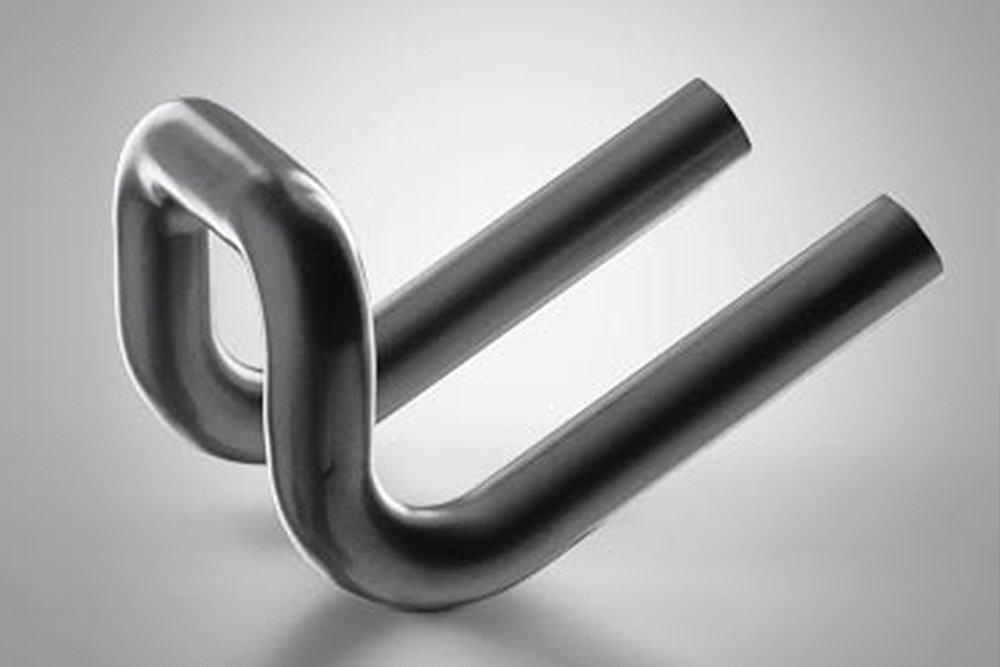
(1) when bending steel pipes with a pipe bender, different templates are made using 8# iron wires according to different pipe diameters, so as to facilitate comparison and inspection during the bending…
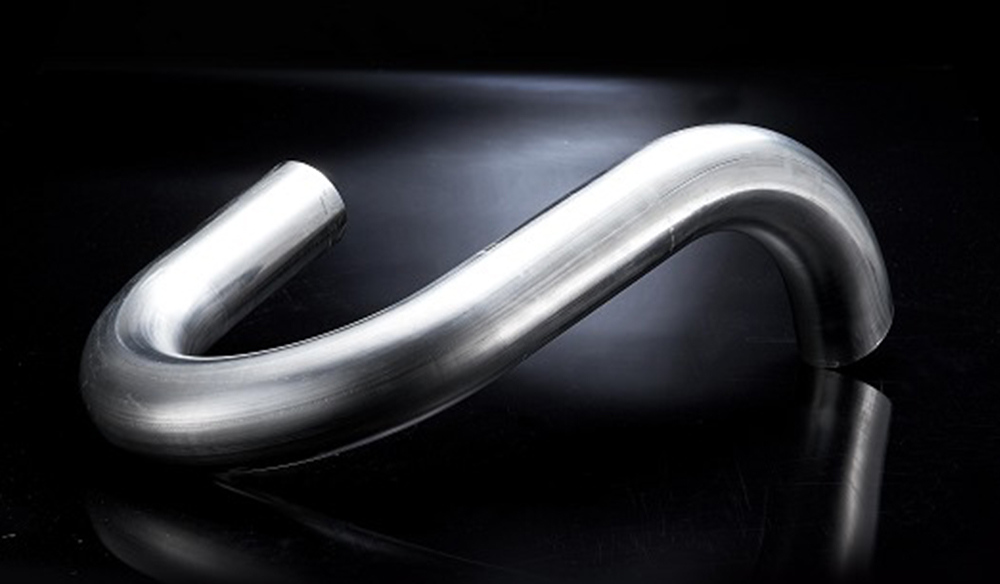
the hydraulic system of the double-way pipe bender consists of a power part, an actuator part, a control part, and an auxiliary part. the functions of each part are as follows:power…